Diamond Shapes Guide: Oval vs Pear vs Marquise vs Radiant vs Emerald & More
The shape of your diamond changes far more than its outline. It affects visual size, proportions, sparkle, style and how the diamond looks on the hand. Compare the most popular Lab-Grown diamond shapes before choosing your engagement ring.
Choose a diamond shape based on the appearance you love rather than carat weight alone. Round offers classic brilliance, Oval creates elegant elongation, Pear gives a distinctive teardrop silhouette, Marquise provides dramatic length, Radiant combines angular lines with lively sparkle, and Emerald delivers a sophisticated step-cut appearance.
Why Diamond Shape Matters
Two diamonds with identical carat weights can look completely different once they are set into an engagement ring.
Diamond shape influences face-up dimensions, visual style, sparkle pattern and the overall proportions of the ring.
Diamond Shapes Compared
| Shape | Overall style | Visual effect | Key consideration |
|---|---|---|---|
| Round | Classic | Balanced brilliance | Cut and diameter |
| Oval | Elegant | Elongated finger coverage | Ratio and bow-tie |
| Pear | Romantic | Elongated teardrop | Symmetry and point |
| Marquise | Dramatic | Very elongated appearance | Symmetry and tips |
| Radiant | Modern | Angular with lively sparkle | Facet pattern and ratio |
| Emerald | Sophisticated | Long, clean step-cut look | Clarity and windowing |
| Cushion | Romantic | Soft square or rectangular shape | Facet pattern |
| Princess | Geometric | Sharp square profile | Corner protection |
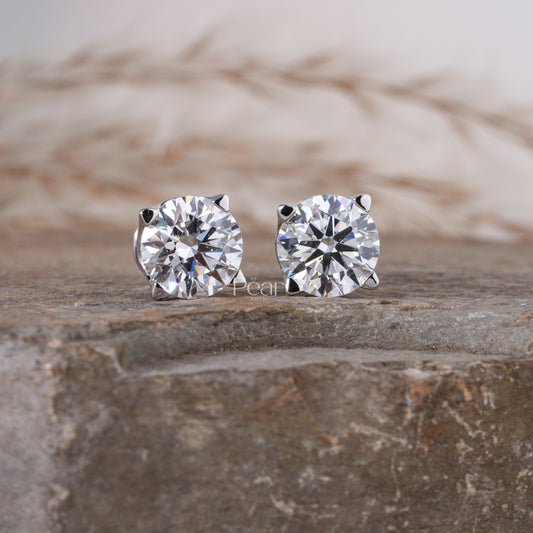
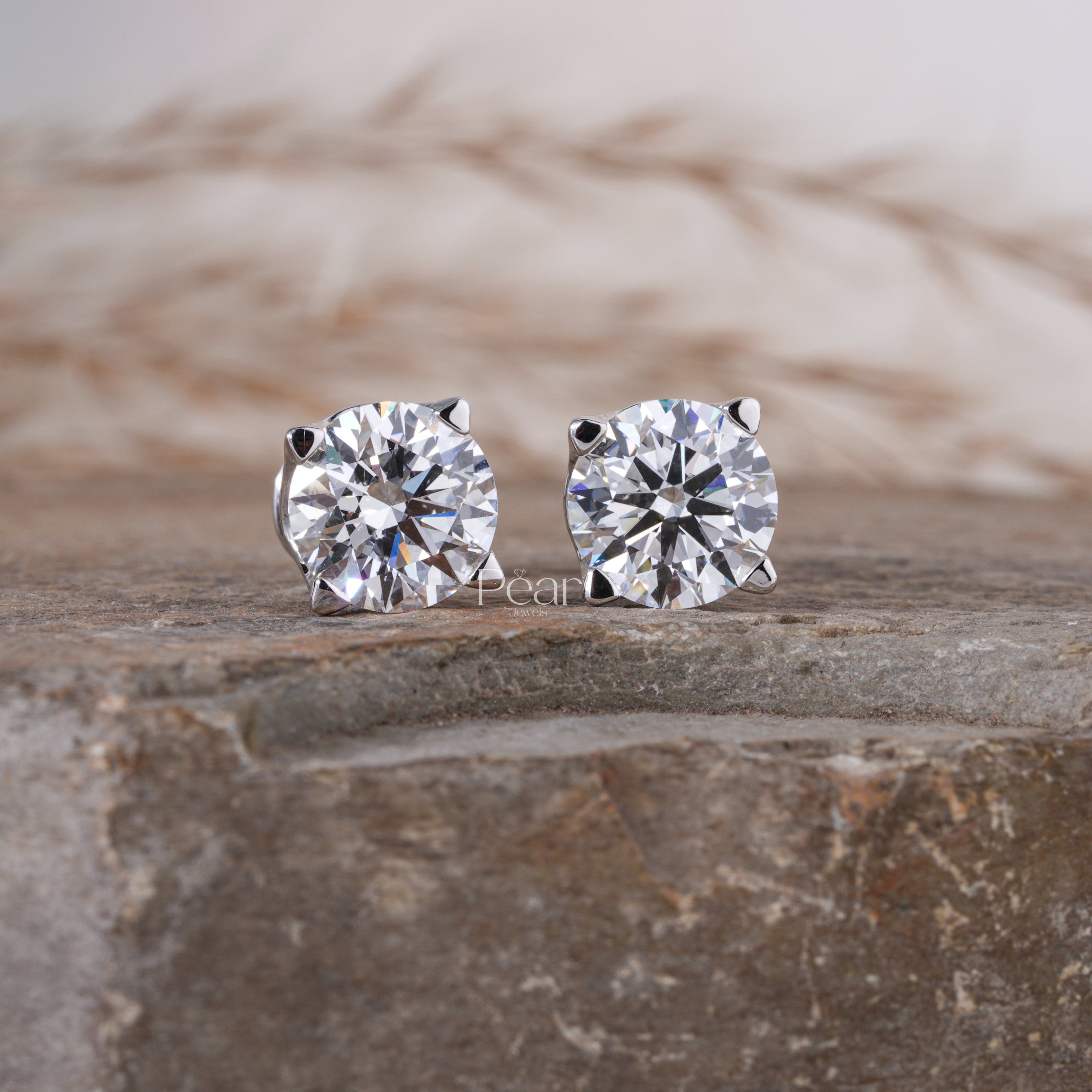
Round Brilliant Diamond
The Round Brilliant is one of the most recognisable diamond shapes. Its symmetrical outline and brilliant-style faceting create a classic engagement-ring appearance.
Timeless brilliance
Ideal for someone who wants a traditional diamond appearance that works across solitaire, halo, pavé and three-stone designs.
Cut & diameter
Pay close attention to cut characteristics, proportions and face-up diameter rather than selecting solely by carat weight.
Oval Cut Diamond
Oval diamonds combine brilliant-style sparkle with an elongated outline, making them particularly popular for modern engagement rings.
The elongated shape can create excellent coverage along the finger.
Pear Shaped Diamond
The Pear combines a rounded end with a tapered point, creating a distinctive teardrop silhouette.
Pear diamonds can be worn with the point facing toward or away from the hand depending on personal preference.
Balanced shoulders
The curved sides should create a visually balanced transition toward the point.
Protect the point
The pointed tip deserves appropriate protection within the setting because it is a more vulnerable part of the diamond.
Marquise Cut Diamond
The Marquise shape features an elongated body with pointed ends, producing a dramatic silhouette and strong face-up spread.
Its length can create an elegant visual effect along the finger.
Radiant Cut Diamond
The Radiant combines an angular outline with brilliant-style faceting.
Radiants can range from nearly square to distinctly elongated, making the length-to-width ratio particularly important.
Compact geometry
A ratio closer to square creates a strong, symmetrical appearance.
Longer silhouette
An elongated Radiant creates greater length along the finger while retaining an angular outline.
Emerald Cut Diamond
Emerald cuts use step-style facets that create a different visual character from brilliant-style diamonds.
Instead of relying primarily on intense sparkle, Emerald cuts are known for clean lines, broad flashes of light and an elegant geometric appearance.
Cushion Cut Diamond
Cushion diamonds typically combine a square or rectangular outline with softened corners.
Facet patterns vary considerably between individual Cushion diamonds, so photographs, videos and physical measurements can be especially useful when comparing stones.
Princess Cut Diamond
Princess diamonds provide a square, geometric appearance with brilliant-style faceting.
The pointed corners are an important setting consideration and should be appropriately protected.
Which Diamond Shape Looks the Largest?
There is no universal answer because face-up size depends on the individual diamond's proportions and dimensions.
However, elongated shapes such as Oval, Pear and Marquise can provide strong visual coverage relative to their weight.
Balanced elongation
Offers excellent finger coverage while maintaining a soft, symmetrical outline.
Tapered length
The pointed silhouette can create a visually elongated appearance.
Maximum length
The long outline can create substantial face-up spread along the finger.
What Is Length-to-Width Ratio?
Length-to-width ratio describes how elongated a diamond appears.
It is particularly useful when comparing Oval, Pear, Marquise, Radiant, Emerald and rectangular Cushion diamonds.
If a diamond measures 10.00 mm long and 7.00 mm wide, its approximate length-to-width ratio is 1.43.
There is no single perfect ratio for every fancy shape. Personal preference matters, so use ratio as a comparison tool rather than a universal quality score.
What Is a Diamond Bow-Tie?
A bow-tie is a darker area that can appear across the centre of certain elongated fancy-shaped diamonds, particularly Oval, Pear and Marquise shapes.
The visibility can vary considerably from stone to stone.
Why IGI Certification Matters When Comparing Shapes
An IGI grading report can provide useful information about an individual Lab-Grown diamond, including its carat weight, physical measurements, colour, clarity and other grading characteristics.
This becomes particularly useful when comparing two diamonds of the same shape and carat weight.
Learn more in our IGI Certified Lab-Grown Diamond Guide.
Choose the Right Setting for Your Diamond Shape
| Shape | Setting consideration | Popular look |
|---|---|---|
| Round | Highly versatile | Solitaire, halo, pavé |
| Oval | Keep the stone visually centred and secure | Solitaire, hidden halo, cathedral |
| Pear | Protect the pointed tip | Solitaire, halo, three-stone |
| Marquise | Protect both pointed ends | Solitaire, halo, vintage-inspired |
| Radiant | Protect corners appropriately | Solitaire, hidden halo, pavé |
| Emerald | Maintain clean geometric lines | Solitaire, three-stone, side baguettes |
| Princess | Protect all four corners | Solitaire, halo, pavé |
Does Metal Colour Change How a Diamond Shape Looks?
Yes. The same diamond shape can create a noticeably different overall style depending on the metal surrounding it.
Bright & seamless
White metals create a clean, contemporary appearance around colourless diamonds.
Warm contrast
Yellow Gold provides a warm traditional contrast against the centre diamond.
Soft warmth
Rose Gold creates a distinctive warm-toned and romantic appearance.
How to Choose Your Diamond Shape
Diamond Shape Buying Checklist
Diamond Shape FAQs
What is the most popular diamond shape?
Round is a longstanding classic, while Oval and other fancy shapes are also popular choices for modern engagement rings.
Which diamond shape looks biggest?
Visible size depends on dimensions and proportions, but elongated shapes such as Oval, Pear and Marquise can provide strong face-up coverage.
Is Oval or Round better?
Neither is universally better. Round offers a classic symmetrical appearance, while Oval provides a more elongated silhouette.
Is Oval or Pear better?
Oval provides symmetrical elongation, while Pear offers an asymmetric teardrop silhouette. The choice is primarily stylistic.
Is Oval or Marquise larger-looking?
Both can provide strong face-up coverage. Marquise often creates greater visual length, but actual millimetre dimensions should be compared.
What is the best Oval diamond ratio?
There is no universal perfect ratio. Some buyers prefer a fuller Oval while others prefer a more elongated appearance.
What is a bow-tie in a diamond?
A bow-tie is a darker area that may appear across the centre of certain elongated fancy-shaped diamonds due to their light behaviour and facet arrangement.
Do all Oval diamonds have a bow-tie?
Bow-tie visibility varies between individual Oval diamonds. It may be subtle in one stone and more noticeable in another.
Is Pear shape good for an engagement ring?
Yes. Pear diamonds create an elegant teardrop silhouette and work well across many engagement-ring settings.
Are Marquise diamonds good for small fingers?
The elongated shape can create a lengthening visual effect on the finger, but the ideal dimensions depend on personal preference.
Is Radiant or Emerald more sparkly?
Radiant diamonds use brilliant-style faceting and generally create a livelier sparkle pattern, while Emerald cuts are known for broad flashes and step-cut elegance.
Is Emerald cut good for an engagement ring?
Yes. Emerald cuts are particularly suited to buyers who appreciate clean lines and understated sophistication.
Does diamond shape affect price?
Yes. Shape, cutting yield, demand, carat weight, specifications and availability can all influence pricing.
Does carat determine diamond size?
No. Carat measures weight. Physical measurements provide a better indication of face-up dimensions.
Why is length-to-width ratio important?
It helps describe how rounded, square or elongated a fancy-shaped diamond appears.
Should a Lab-Grown diamond be IGI certified?
Independent grading information is useful for understanding important specifications of a significant centre diamond.
Can Pear Jewels make a custom diamond shape engagement ring?
Pear Jewels offers customisation for selected designs, allowing customers to discuss their preferred diamond shape, carat weight, precious metal, ring size and setting details.