Oval vs Round Diamond: Which Shape Is Right for You?
Both are brilliant cuts celebrated for exceptional sparkle—but Oval and Round diamonds create very different proportions, personalities and visual effects on the hand.
Choose an Oval diamond if you want an elongated silhouette, generous finger coverage and a modern romantic look. Choose a Round diamond if you want the most classic shape, highly consistent brilliance, easy symmetry assessment and exceptional setting versatility. Oval diamonds may appear larger from above at a similar carat weight, while Round diamonds are prized for their balanced sparkle and timeless appeal.
Oval vs Round Diamond: Quick Comparison
Elongated brilliance with modern romance
A modified brilliant cut with rounded ends, graceful finger coverage and a flattering lengthening effect.
Iconic symmetry and balanced brilliance
The classic brilliant cut with a perfectly circular outline and highly refined light-performance standards.
| Feature | Oval | Round |
|---|---|---|
| Outline | Elongated with soft curves | Perfectly circular |
| Facet style | Modified brilliant | Round brilliant |
| Light performance | Lively sparkle with possible bow tie | Highly balanced brilliance and fire |
| Visual spread | Often appears larger from above | More compact, even coverage |
| Personality | Romantic, elegant and modern | Classic, iconic and versatile |
| Best for | Finger coverage and elongated styling | Timeless brilliance and symmetry |
What Is an Oval Diamond?
An Oval diamond is a modified brilliant cut that combines rounded curves with an elongated silhouette.
Its shape can create substantial face-up presence and visually lengthen the finger. Because Oval diamonds are not governed by one universally ideal outline, buyers should compare length-to-width ratio, symmetry, shoulder shape and bow-tie visibility.
Generous coverage
The elongated outline spreads carat weight vertically and can look substantial from above.
Romantic character
Soft curves feel graceful, contemporary and highly bridal.
Flexible proportions
Choose a fuller Oval for softness or a slender Oval for a more dramatic lengthening effect.
What Is a Round Brilliant Diamond?
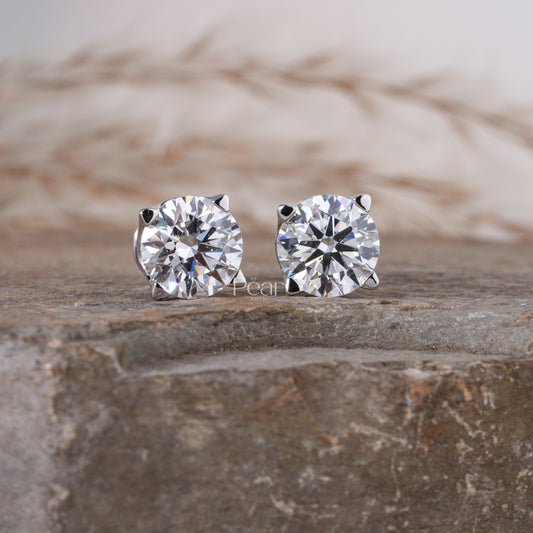
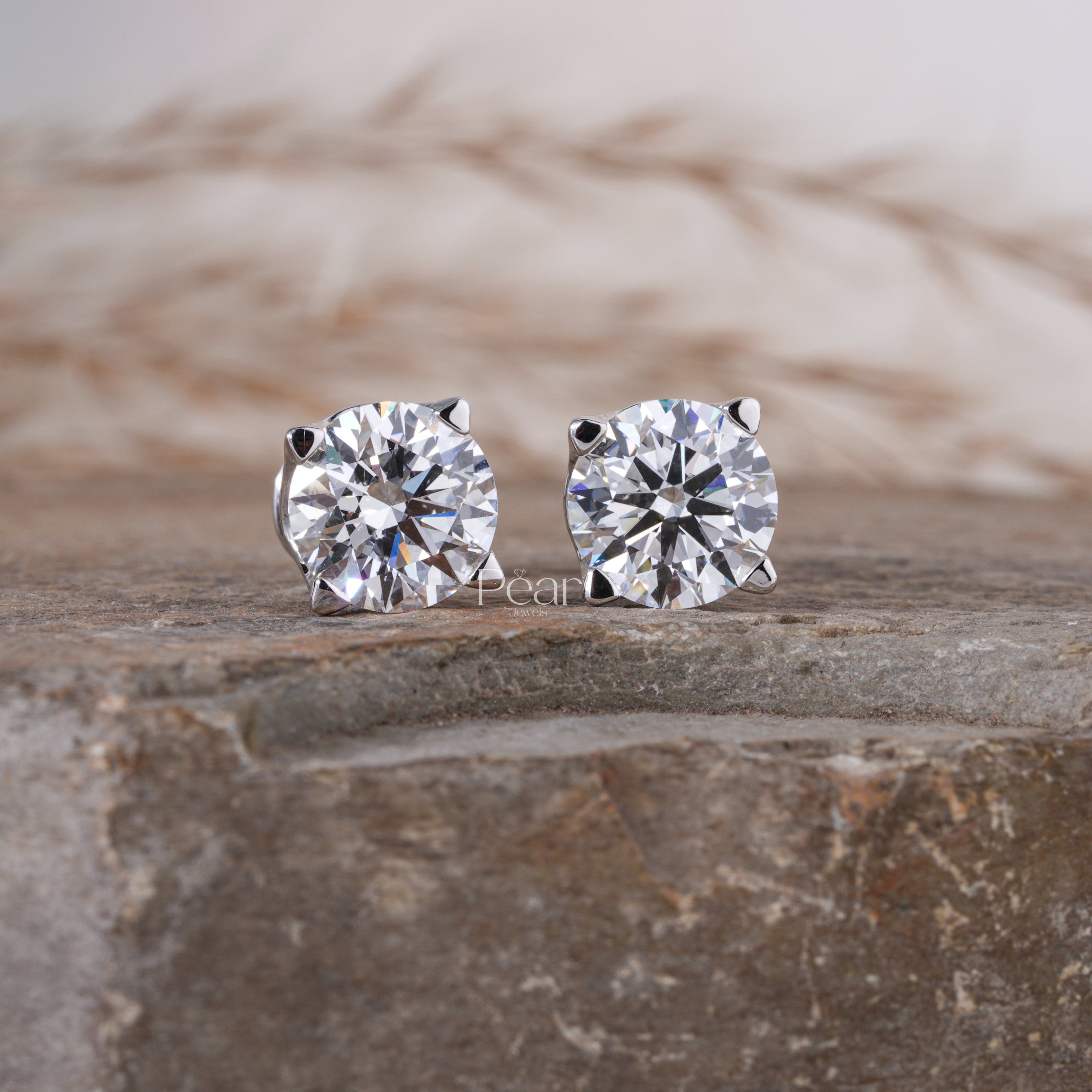
A Round brilliant diamond uses a circular outline and highly developed facet arrangement designed to maximise balanced brightness, fire and scintillation.
Its symmetry makes comparison relatively straightforward, and its classic shape works with nearly every engagement-ring setting. A well-cut Round diamond remains one of the strongest choices for buyers who prioritise dependable sparkle and enduring style.
Balanced light return
Excellent proportions can produce brilliance across the entire diamond.
Timeless identity
The circular silhouette has remained central to engagement-ring design for generations.
Setting freedom
Round diamonds suit solitaire, halo, hidden halo, cathedral, bezel and vintage-inspired settings.
Eight Important Differences
Elongated vs circular
Oval creates a vertical visual line. Round creates even, centred symmetry.
Both are brilliant cuts
Round is more standardised, while Oval light performance varies more from stone to stone.
Oval often appears larger
Its elongated surface can create greater face-up spread at a similar weight.
Oval requires inspection
Many Ovals show a darker central bow tie. A Round diamond does not have the same elongated bow-tie pattern.
Round is easier to assess
A Round should be evenly circular. Oval shoulders, ends and outline can vary noticeably.
Modern romance vs classic icon
Oval feels contemporary and graceful. Round feels traditional, polished and universal.
Oval creates more length
Round concentrates attention at the centre, while Oval extends visually along the finger.
Both are highly versatile
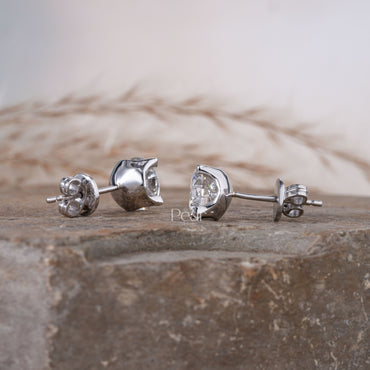
Oval benefits from secure end prongs; Round works naturally with four- or six-prong arrangements.
Which Looks Bigger: Oval or Round?
At the same carat weight, an Oval diamond may appear larger because its surface area is distributed across a longer outline. The elongated shape also creates more visible finger coverage.
A Round diamond may have a more compact diameter, but its even brilliance can create strong visual impact. Exact appearance depends on millimetre measurements, depth, cut, setting and the wearer’s finger size.
Vertical spread
Offers length and broader finger coverage, especially in slender proportions.
Even diameter
Creates concentrated presence and symmetry in every direction.
Framing matters
A halo, bezel, side stones or pavé band can change the apparent size of either shape.
Which Sparkles More?
Both shapes are designed for brilliance. Round diamonds have highly refined cut standards and generally offer more predictable, balanced light return. Oval diamonds can be equally captivating, but their performance depends more heavily on proportions, facet pattern and bow-tie intensity.
Lively and elongated
Produces attractive flashes across a larger outline, with visual character that varies from diamond to diamond.
Balanced and consistent
Offers a highly symmetrical pattern of brightness, fire and scintillation when well cut.
Cut, Bow Tie, Symmetry and Proportions
| Quality factor | Oval | Round |
|---|---|---|
| Cut assessment | Evaluate visually because proportions and outlines vary | Cut grading and established proportion standards provide stronger guidance |
| Symmetry | Check even shoulders, matching sides and centred ends | Check a balanced circular outline and facet alignment |
| Bow tie | Inspect whether the dark centre is subtle or distracting | Not evaluated in the same elongated form |
| Length-to-width ratio | Controls whether the stone appears fuller or more slender | Approximately equal length and width by definition |
| Clarity masking | Brilliant facets can disguise some inclusions | Brilliant facets also conceal many inclusions effectively |
| Colour | Inspect the tips and body for visible warmth | Balanced shape and light return can make colour easier to compare consistently |
Which Shape Suits Different Hands?
| Hand or finger type | Oval | Round |
|---|---|---|
| Short fingers | Excellent—the vertical outline can create length | Works well in a delicate setting or smaller diameter |
| Long fingers | Creates elegant continuity | Provides classic balanced contrast |
| Wide fingers | A broader Oval or side-stone setting can provide coverage | A halo or wider band can create balanced proportion |
| Slim fingers | A moderate-width Oval feels graceful and delicate | A Round solitaire creates a clean focal point |
| Small hands | Soft curves and vertical length can feel harmonious | The circular shape offers compact, timeless balance |
| Minimalist style | Choose a clean Oval solitaire | Round solitaire is the most iconic minimalist option |
Personal preference remains more important than any hand-shape rule. The best diamond is the one the wearer feels naturally drawn to.
Best Settings for Oval and Round Diamonds
Maximum centre focus
Oval feels elongated and romantic; Round feels timeless and perfectly balanced.
Subtle side sparkle
Adds detail beneath either shape without creating a broad traditional halo.
Elevated elegance
Raised shoulders provide presence and can support a refined side profile.
Symbolic coverage
Oval pairs beautifully with pear or round sides; Round works with almost every accent shape.
Modern protection
A bezel frames the outline clearly while offering additional edge protection.
Continuous brilliance
Band diamonds extend sparkle beyond the centre and create a luxurious bridal finish.
Maximum visual spread
A surrounding halo can make either centre appear larger and more glamorous.
Classic security
Especially natural for Round diamonds, creating a traditional and secure appearance.
Use the Diamond Shapes Guide to compare more popular engagement-ring shapes.
Which Shape Pairs Better With a Wedding Band?
Both shapes pair beautifully with plain, pavé, eternity and contoured wedding bands. The important factor is not the centre shape alone, but the height and width of the engagement-ring basket.
Straight band
A raised basket may allow the wedding ring to sit closely beside the engagement ring.
Contoured band
A curved band can follow the centre setting when the basket extends outward.
Diamond stack
Mixing pavé, eternity and shaped bands can create a personalised bridal stack.
Oval vs Round Diamond: Budget Guidance
Pricing varies according to carat weight, cut quality, dimensions, colour, clarity, setting and precious metal. Compare complete ring options rather than assuming one shape will always cost less.
Prioritise visible beauty
Choose balanced proportions and a refined solitaire, bezel or lightly detailed setting.
Increase presence
Consider a larger centre, hidden halo, pavé band or upgraded gold option.
Create a statement ring
Explore larger carat sizes, premium metals, complex settings and carefully matched side stones.
Where to allocate the budget
For an Oval, prioritise an attractive outline, manageable bow tie and strong face-up brightness. For a Round, prioritise excellent cut and balanced light performance before paying for clarity or colour differences that are difficult to see.
Oval and Round Diamond Pros & Cons
Pros and considerations
Appears visually large
Elongates the finger
Strong brilliance
Modern romantic style
Bow tie can vary
Outline quality differs
Symmetry requires care
Ends need secure prongs
Pros and considerations
Timeless and versatile
Predictable brilliance
Easy symmetry comparison
Works with every setting
More compact face-up spread
May feel less distinctive
Classic demand can affect pricing
Does not create the same finger-lengthening effect
Which Diamond Shape Should You Choose?
Oval vs Round Diamond FAQs
Which looks bigger, Oval or Round?
An Oval often appears larger from above because its carat weight is spread across an elongated surface. Compare actual millimetre dimensions.
Which sparkles more?
Both are brilliant cuts. A well-cut Round generally provides more predictable, balanced brilliance, while a beautiful Oval can offer equally lively sparkle across a longer outline.
Is Oval more expensive than Round?
Pricing varies by carat, quality, dimensions and availability. Compare individual diamonds and complete ring configurations.
Which shape is more timeless?
Round is generally considered the most classic, while Oval combines classic brilliance with a more contemporary elongated silhouette.
What is the bow-tie effect in an Oval diamond?
It is a darker area across the centre caused by the way light interacts with elongated facets. A subtle bow tie is common, but it should not dominate the diamond.
Do Round diamonds have bow ties?
Round diamonds do not display the same elongated bow-tie pattern associated with Oval, Pear and Marquise cuts.
Which shape hides inclusions better?
Both brilliant cuts can mask many inclusions. Placement, size and contrast matter more than the shape alone.
Which is better for short fingers?
Oval often creates a stronger lengthening effect. Round can also work beautifully in a refined or vertically detailed setting.
Which is better for wide fingers?
A broader Oval, halo or side-stone setting can create generous coverage. Round can be balanced with a wider band or halo.
Which shape is easier to evaluate online?
Round diamonds are generally easier because their cut standards and symmetry are more standardised. Oval diamonds benefit from careful visual review.
Which shape suits a solitaire setting?
Both. Oval creates an elegant elongated focal point, while Round creates a classic symmetrical centre.
Which shape suits a hidden halo?
Both pair beautifully with hidden halos, adding side sparkle while maintaining a clean top view.
Which is better for a bezel setting?
Both are suitable. A bezel highlights the Oval’s elongated curves or the Round diamond’s perfect circular outline.
Which is more durable?
Both have rounded outlines without sharp corners. Durability depends largely on the setting, construction and how the ring is worn.
Does an Oval need special prongs?
Secure prongs should protect both rounded ends. The exact prong style depends on the ring design.
Is a six-prong setting better for a Round diamond?
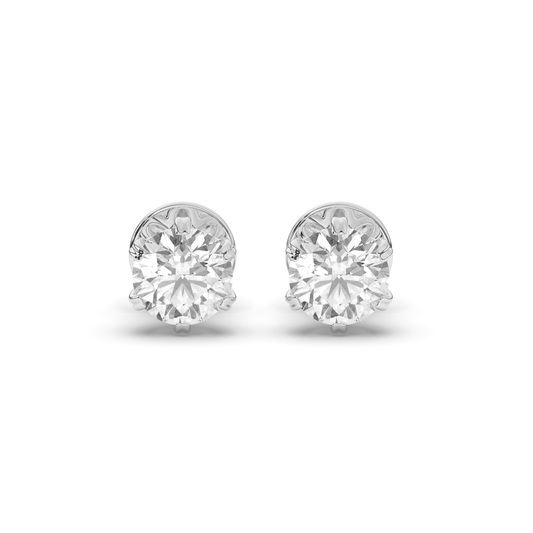
Six prongs create a classic appearance and additional holding points, while four prongs expose more of the diamond.
Which shape photographs better?
Both photograph beautifully. Oval creates graceful length, while Round produces an iconic symmetrical outline.
Which shape pairs best with side stones?
Oval pairs well with Pear, Round and Marquise accents. Round works with almost every side-stone shape.
Which metal suits Oval diamonds?
White metals emphasise brightness, yellow gold adds contrast and warmth, and rose gold enhances the romantic curves.
Which metal suits Round diamonds?
Round diamonds are highly versatile and work beautifully in white, yellow and rose gold as well as platinum.
Can I customise either shape?
Yes. Pear Jewels can help personalise the diamond size, setting, precious metal, band details and engraving.
Where can I compare more diamond shapes?
Visit the Pear Jewels Diamond Shapes Guide.