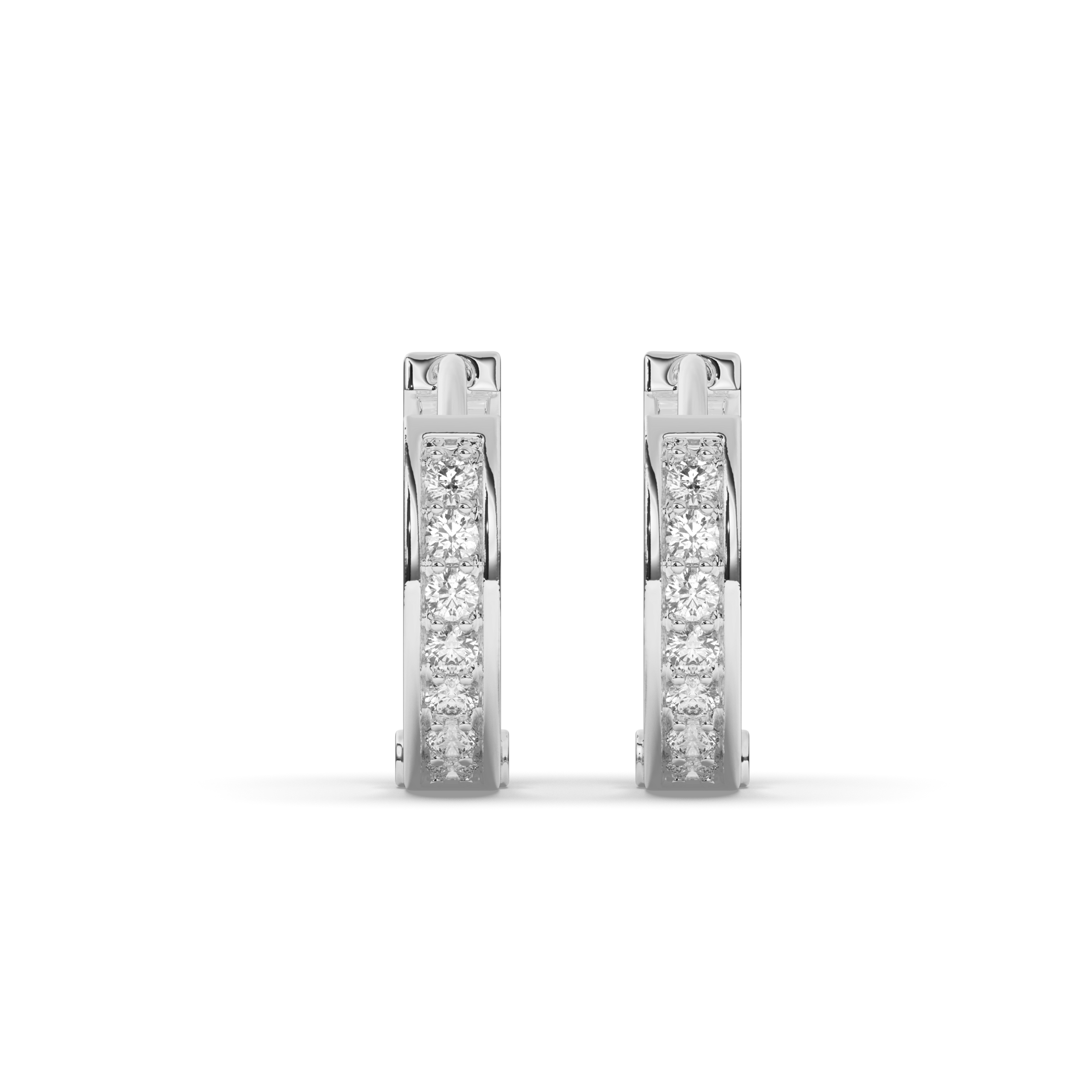
Pavé vs Channel-Set Engagement Ring: Which Band Style Is Better?
Pavé and channel-set bands both add accent diamonds to an engagement ring, but they create very different levels of sparkle, smoothness and structure. Pavé aims for delicate brilliance with minimal visible metal, while channel setting places diamonds securely between two polished metal walls.
Choose pavé if you want a slim band with maximum visible sparkle and a delicate, refined appearance. Choose channel setting if you prefer a smoother surface, stronger metal edges and a more structured design for everyday wear. Pavé looks lighter and more diamond-forward; channel setting feels more substantial and protected.
Pavé vs Channel-Set: Quick Comparison
Fine, continuous sparkle
Small diamonds are secured with tiny beads or shared prongs so that very little metal is visible from above.
Smooth, structured and protected
Diamonds sit side by side inside a groove between two continuous metal walls, usually without prongs between each stone.
| Feature | Pavé | Channel Set |
|---|---|---|
| Diamond security | Tiny beads or shared prongs hold each stone | Diamonds are secured between continuous metal walls |
| Visible metal | Very little from above | Metal borders remain clearly visible |
| Sparkle | Fine, continuous and diamond-forward | Clean row of brilliance with a structured outline |
| Band profile | Can be slim and delicate | Usually requires enough width for the channel walls |
| Snagging | Low when finished well, but exposed beads can wear | Generally smooth with no projecting prongs |
| Resizing | Can be limited depending on coverage | Can be difficult because channel tension must remain even |
| Best for | Maximum sparkle and refined elegance | Practical smoothness and architectural style |
What Is a Pavé Engagement Ring?
Pavé is a setting technique in which small diamonds are placed closely together and secured with tiny metal beads or miniature shared prongs.
The word is associated with the appearance of a surface paved with diamonds. Because the holding points are extremely small, the band can look like a continuous ribbon of light.
Pavé may cover only the upper shoulders of an engagement ring, extend halfway around the band or continue almost completely around it.
Minimal visible metal
Tiny beads allow the accent diamonds to remain the dominant feature.
Delicate proportions
Small diamonds can add brilliance without making the band look heavy.
Flexible styling
Pavé suits solitaire, halo, hidden-halo, three-stone and vintage-inspired rings.
What Is a Channel-Set Engagement Ring?
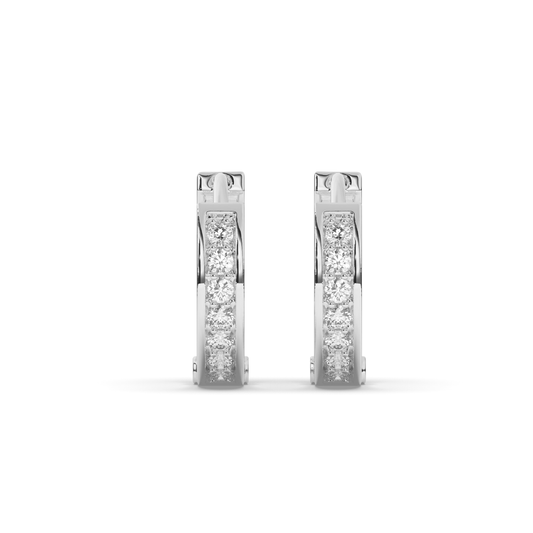
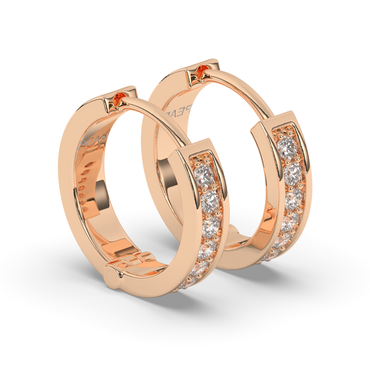
A channel setting places diamonds in a continuous groove between two parallel metal walls.
The stones are aligned closely together, while the outer metal edges protect their sides and create a smooth, polished border.
Channel setting is commonly used with Round, Princess, Baguette and step-cut accent diamonds. It produces a clean, geometric look and is especially attractive for buyers who prefer smooth surfaces and visible metal structure.
Protected edges
The channel walls shield the sides of the accent diamonds from direct contact.
Smooth finish
There are no projecting prongs between the diamonds.
Architectural appearance
The polished borders create a precise and contemporary diamond row.
Eight Important Differences
Beads vs metal walls
Pavé uses tiny holding points; channel setting secures stones between continuous rails.
Fine vs structured
Pavé creates a seamless surface of light; channel setting shows a framed row.
Minimal vs defined
Channel walls remain visible, while pavé intentionally reduces visible metal.
Exposed vs bordered
Channel-set stones receive greater side protection from the metal edges.
Fine vs substantial
Pavé can suit very slim bands; channel setting generally requires more width.
Beads vs groove
Pavé has many tiny crevices, while channel grooves can collect residue beneath stones.
Both need planning
Changes near diamond-set sections can disturb spacing or setting pressure.
Romantic vs architectural
Pavé feels delicate and glamorous; channel setting looks smooth and structured.
Which Setting Sparkles More?
Pavé usually creates the strongest impression of uninterrupted sparkle because less metal is visible between and around the accent diamonds.
Channel-set diamonds can still look brilliant, but the polished metal borders frame the row and create a more ordered visual rhythm.
A ribbon of light
Ideal when the goal is to maximise visible diamond coverage on a slim band.
A framed diamond line
Ideal when sparkle should feel clean, balanced and integrated with the metal.
Which Setting Is More Secure?
Channel setting usually provides more protection around the sides of the accent diamonds because the metal walls shield their edges and there are no projecting prongs between each stone.
Pavé can still be secure when the band has adequate metal, the diamonds are properly seated and the tiny beads are well formed. However, because those beads are small, wear or a hard impact can affect them over time.
| Security factor | Pavé | Channel Set |
|---|---|---|
| Stone support | Individual beads or shared micro-prongs | Continuous pressure from channel walls |
| Side protection | More exposed | Greater protection from metal borders |
| Impact response | A damaged bead can affect one or more stones | A bent channel can disturb several stones along the row |
| Wear points | Numerous tiny beads | Long metal rails and stone seats |
| Inspection | Check for lifting beads or moving stones | Check rails for bending, gaps or looseness |
Which Setting Is More Comfortable?
Channel-set bands generally feel smoother because the diamond row is recessed between polished metal walls and there are no raised prongs between stones.
Well-finished pavé can also feel refined, but exposed beads and diamond edges may be more noticeable when the setting extends around the sides of the finger.
Fine surface texture
Very small beads create delicate texture across the diamond-set area.
Polished borders
Continuous outer rails produce a smooth and contained feel.
Finish matters
Comfort depends on band width, stone height, craftsmanship and finger coverage.
How Band Width Changes the Look
Pavé works beautifully on fine bands because tiny diamonds can be secured with very little visible metal. This makes the centre stone appear more prominent and can create a delicate finger-coverage effect.
Channel setting requires enough metal on both sides of the diamond row. The result is usually a wider, more substantial band with a stronger visual outline.
| Design goal | Better fit | Why |
|---|---|---|
| Very slim engagement-ring band | Pavé | Small accent stones and tiny beads preserve delicacy |
| Bold contemporary band | Channel Set | Metal rails create stronger width and structure |
| Centre stone should dominate | Pavé | The band can visually recede into sparkle |
| Metal colour should remain visible | Channel Set | Polished borders clearly show white, yellow or rose gold |
| Geometric accent diamonds | Channel Set | Princess and Baguette stones create a precise continuous row |
| Soft romantic detailing | Pavé | Round micro-diamonds create delicate brilliance |
Which Setting Is Easier to Resize?
Both styles can limit resizing when diamonds extend far around the band. The safest designs leave an undecorated sizing area at the base of the ring.
Pavé resizing can disturb the spacing of tiny diamonds or weaken the beads near the alteration. Channel-set resizing can change the channel’s curve and pressure, potentially creating gaps between stones.
Protect bead alignment
Small size adjustments may be possible when sufficient plain metal remains beneath the finger.
Protect channel tension
Changes must preserve the exact curve and continuous support along the diamond row.
Which Setting Is Easier to Clean and Maintain?
Pavé has numerous tiny spaces around the beads where lotion, soap and fine debris can collect. Gentle brushing helps restore the continuous sparkle.
Channel settings have smooth upper edges but can collect residue underneath the diamonds inside the groove. Cleaning from the underside is important where access is available.
Protect the fine beads
Use a soft brush and avoid aggressive scrubbing, hard knocks and abrasive cleaning methods.
Clean inside the groove
Brush gently around and beneath the diamond row to remove trapped residue.
Read the complete Pear Jewels Jewellery Care Guide for ongoing care advice.
Pavé vs Channel-Set Wedding Bands
Both settings can create beautiful wedding bands, but they produce different stack proportions.
Delicate coordination
Pairs naturally with a fine pavé engagement-ring band for a continuous sparkle effect.
Smooth contrast
Adds clean metal borders and visual structure to a bridal stack.
Balanced texture
A pavé engagement ring can be paired with a channel-set band for contrast.
| Stacking priority | Recommended style |
|---|---|
| Maximum uninterrupted sparkle | Pavé engagement ring with a matching pavé wedding band |
| Smooth daily-wear stack | Channel-set wedding band with protected outer rails |
| Delicate engagement ring with a stronger base | Pavé engagement ring paired with a channel-set band |
| Visible precious-metal borders | Channel-set engagement ring and wedding band |
| Fine, romantic bridal set | Matching micro-pavé bands |
For more matching advice, explore the Wedding Ring Guide and Eternity Rings Explained.
Which Centre Diamond Shapes Suit Each Band?
| Centre shape | Pavé Band | Channel-Set Band |
|---|---|---|
| Round | Creates classic continuous brilliance | Adds a clean, structured contrast |
| Oval | Maintains an elongated, delicate appearance | Balances the centre with a wider architectural band |
| Emerald | Adds fine sparkle around a calm step-cut centre | Pairs beautifully with Baguette or Princess accents |
| Radiant | Maximises overall brilliance | Complements the clipped-corner geometry |
| Pear | Preserves a graceful and refined silhouette | Creates stronger visual balance beneath the asymmetric centre |
| Marquise | Supports a fine, elongated aesthetic | Adds width and structure to balance the long centre |
| Cushion | Creates soft romantic sparkle | Introduces clean borders around a rounded-square centre |
| Princess | Round pavé creates contrast | Princess-cut channel accents create strong geometric continuity |
Compare centre-stone silhouettes in the Diamond Shapes Guide.
Pavé and Channel-Set Pros & Cons
Pros and considerations
Maximum visible sparkle
Minimal metal appearance
Works beautifully on slim bands
Complements almost every centre shape
Tiny beads require periodic inspection
More exposed diamond edges
Fine crevices can collect residue
Full pavé can restrict resizing
Pros and considerations
Smooth, snag-resistant surface
Protected diamond edges
Clean contemporary structure
Excellent for geometric accent stones
Usually requires a wider band
More visible metal around the stones
Residue may collect inside the channel
Resizing can disturb channel pressure
Should You Choose Pavé or Channel Setting?
Pavé vs Channel-Set Engagement Ring FAQs
What is the main difference between pavé and channel setting?
Pavé uses tiny beads or micro-prongs to secure small diamonds with minimal visible metal. Channel setting holds diamonds between two continuous metal walls.
Which setting sparkles more?
Pavé usually looks more sparkly because less metal is visible between and around the diamonds.
Which setting is more secure?
Channel setting generally offers more side protection, although security depends on craftsmanship and maintenance.
Can pavé diamonds fall out?
Any small accent stone can loosen if its bead is worn or damaged. Regular inspection helps identify problems early.
Can channel-set diamonds fall out?
Yes, particularly if a channel wall becomes bent or the spacing changes. A damaged rail may affect multiple stones.
Which setting snags less?
Channel setting generally snags less because it has smooth outer rails and no projecting prongs between stones.
Is pavé comfortable for everyday wear?
Yes, when the setting is finely finished and does not extend too far between the fingers.
Is channel setting comfortable?
Yes. Its smooth borders make it a popular choice for practical daily wear.
Which setting works on a thinner band?
Pavé generally works better on a slim band because it requires less visible metal around the diamonds.
Does channel setting make a band look wider?
Usually, because enough metal is needed on both sides of the diamond row to form the channel.
Which is easier to clean?
Both need careful cleaning. Pavé has tiny bead spaces, while channel settings can collect residue beneath the stones.
Which is easier to resize?
Both can be challenging when diamonds extend far around the band. A plain sizing area improves flexibility.
Can a full pavé ring be resized?
Resizing may be very limited because changing the circumference can disturb diamond spacing and bead security.
Can a full channel-set ring be resized?
It can be difficult because the channel pressure and spacing must remain even around the complete band.
Is pavé suitable for an engagement ring?
Yes. Pavé is one of the most popular ways to add refined sparkle to the shoulders of an engagement ring.
Is channel setting suitable for an engagement ring?
Yes. It works especially well for buyers who want a smooth, structured and contemporary diamond band.
Which is better for a wedding band?
Pavé offers delicate sparkle, while channel setting offers smoother borders and greater side protection.
Can I pair a pavé engagement ring with a channel-set wedding band?
Yes. The contrast between fine sparkle and polished channel borders can create a balanced bridal stack.
Which accent diamonds work best in a channel?
Round, Princess, Baguette and other straight-edged diamonds can work beautifully when precisely matched.
Which diamonds are normally used in pavé?
Small Round brilliant diamonds are most common because they create continuous sparkle and can be set closely together.
Does pavé make the centre diamond look bigger?
It can make the overall ring look more brilliant and may visually emphasise the centre through contrast.
Does channel setting protect diamonds better?
The metal rails protect the side edges, but they do not prevent all damage or looseness.
Can pavé or channel setting be customised?
Yes. Pear Jewels can personalise the band width, accent-diamond size, coverage, setting style, precious metal and centre stone.
Where can I compare more engagement-ring settings?
Visit the Pear Jewels Engagement Ring Guide.