Four-Prong vs Six-Prong Engagement Ring: Which Is Better?
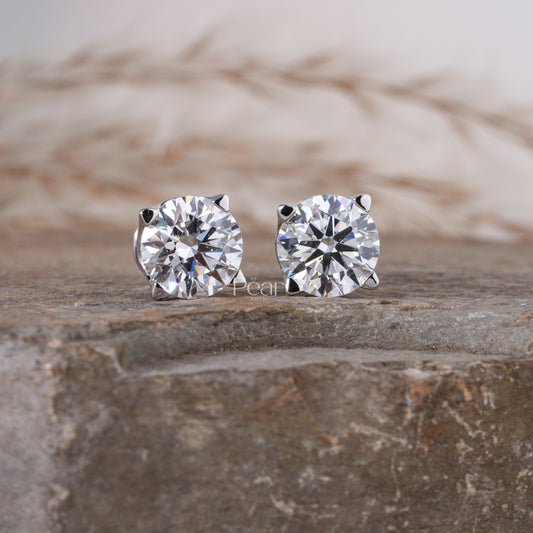
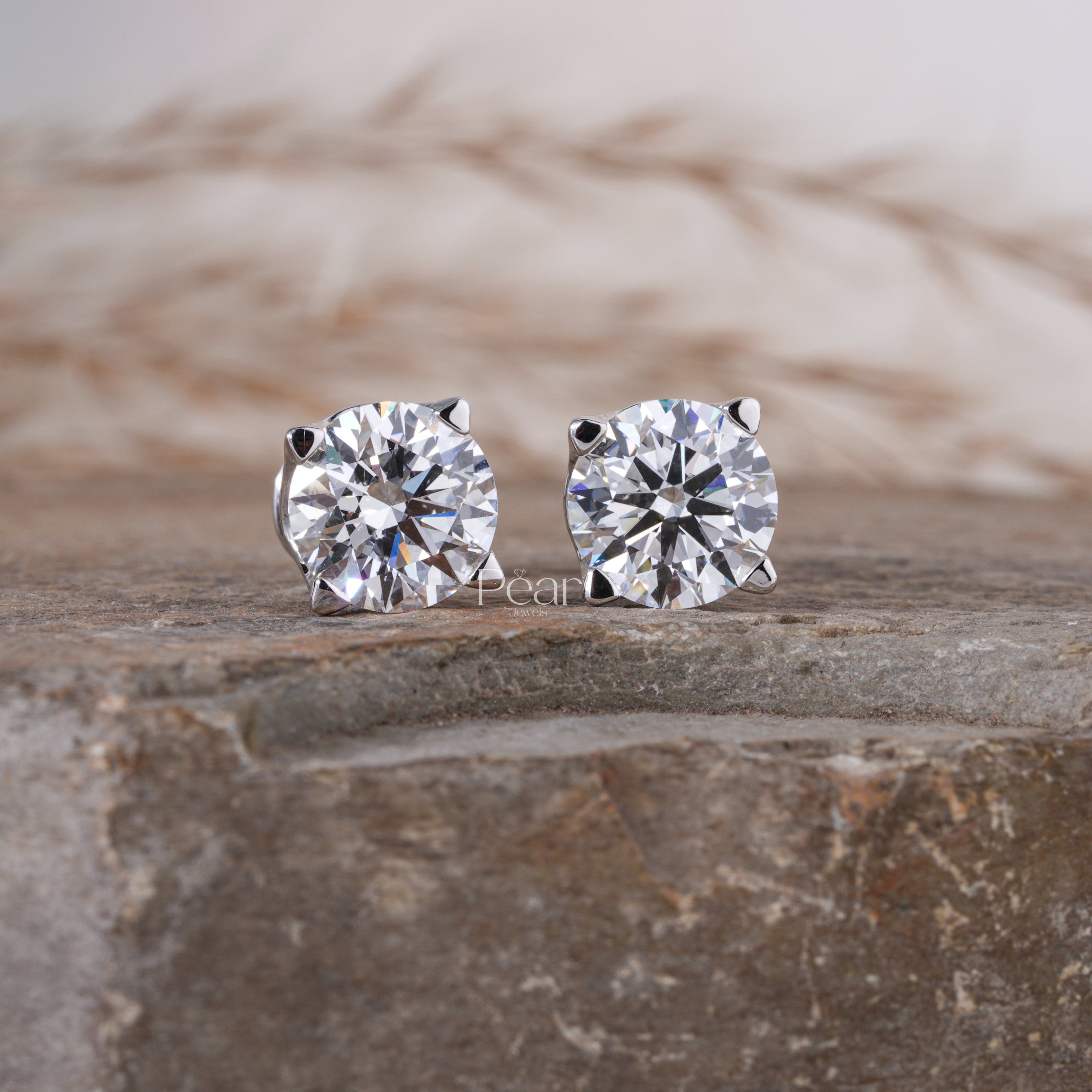
Four-prong and six-prong settings can hold the same diamond yet create different levels of visibility, security and style. Four prongs reveal more of the outline, while six prongs provide two additional holding points and a more enclosed appearance.
Choose four prongs if you want maximum diamond visibility, a lighter appearance and clearly defined corners. Choose six prongs if you prefer two additional holding points, a more rounded frame and greater reassurance if one prong is damaged. Construction quality, prong thickness and regular inspection matter more than prong count alone.
Four-Prong vs Six-Prong Setting: Quick Comparison
Open, light and highly visible
Four claws hold the diamond at evenly spaced points while leaving more of its edge exposed.
Balanced, secure and softly framed
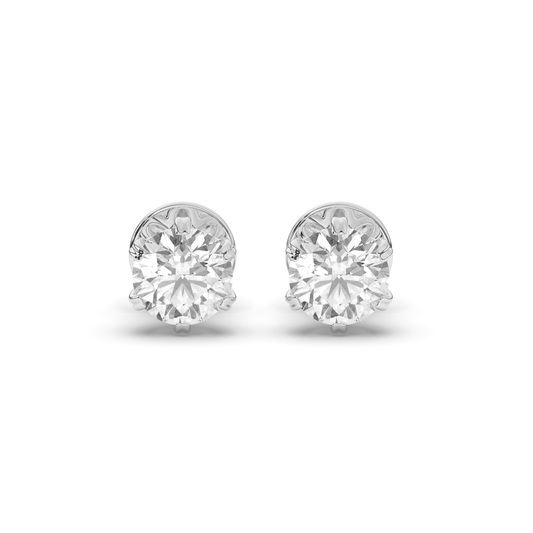
Six claws distribute support around the diamond and create a more enclosed visual outline.
| Feature | Four Prongs | Six Prongs |
|---|---|---|
| Holding points | Four | Six |
| Diamond exposure | More open edge and surface visibility | Slightly more metal around the perimeter |
| Visual shape | Can emphasise square or compass-like geometry | Can make a Round diamond appear rounder |
| Security redundancy | Fewer holding points if one is damaged | Two additional holding points |
| Cleaning access | Generally easier between wider gaps | More prongs and smaller gaps to clean |
| Best for | Maximum visibility and minimal metal | Reassurance, balance and classic Round centres |
What Is a Four-Prong Setting?
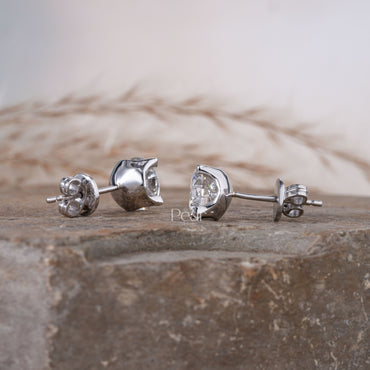
A four-prong setting uses four metal claws to secure the diamond at evenly spaced points.
The arrangement may place prongs at the corners or at north, south, east and west. Because fewer claws are used, more of the diamond’s edge and crown remain visible.
Four-prong designs are popular for buyers who prefer a light, refined setting with minimal metal around the centre.
Maximum exposure
Wider spaces between prongs reveal more of the diamond.
Defined geometry
Corner placement can emphasise a square or rectangular outline.
Easy visual inspection
The diamond and underside are often easier to see and clean.
What Is a Six-Prong Setting?
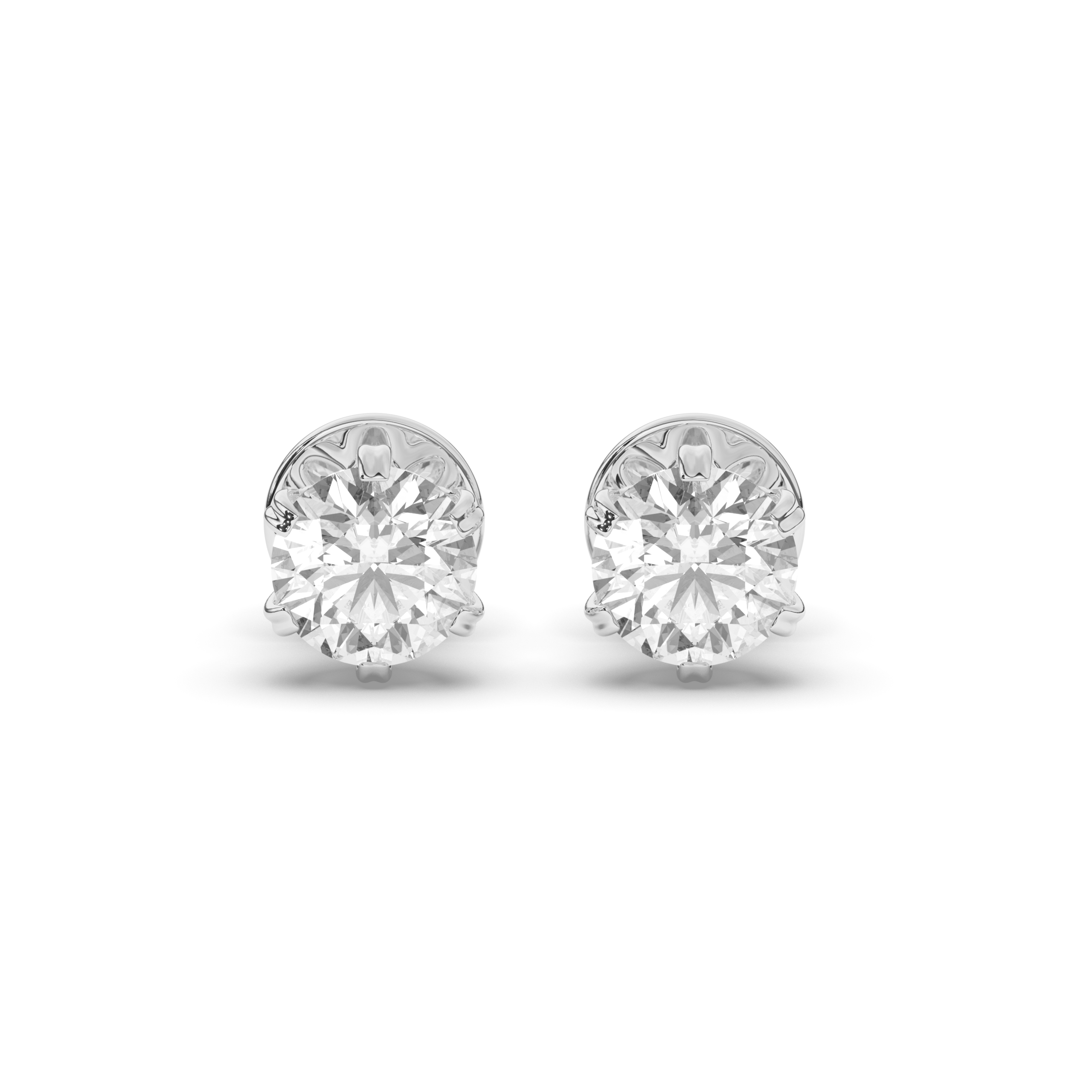
A six-prong setting uses six metal claws positioned around the centre diamond.
The additional holding points distribute support more evenly and may provide greater reassurance if one prong becomes damaged. Six-prong settings are particularly associated with Round brilliant diamonds.
The metal arrangement can subtly round the outline and create a more traditional, enclosed visual frame.
Additional support
Six contact points provide more holding locations around the diamond.
Balanced appearance
The prongs create an even, symmetrical frame.
Round enhancement
Six evenly spaced claws can reinforce a Round diamond’s circular outline.
Eight Important Differences
Four vs six points
Six prongs provide two additional holding points around the diamond.
More vs slightly less
Four prongs leave more of the perimeter visually open.
Angular vs rounded
Four may emphasise corners; six may make the outline look more circular.
Minimal vs framed
Six prongs introduce more visible metal around the centre.
Wider vs smaller gaps
Four-prong baskets may offer easier access between claws.
Fewer vs more checks
Six prongs provide redundancy but create two extra points to inspect.
Exposure vs framing
Four prongs show more diamond; six create a complete visual border.
Shape dependent
Round centres suit either, while elongated shapes require careful placement.
Is Six Prongs Safer Than Four?
Six prongs offer additional holding-point redundancy. If one prong is bent or damaged, five others may continue supporting the diamond until the ring can be repaired.
Four-prong settings can still be highly secure when the claws are correctly proportioned, positioned and maintained. A poorly constructed six-prong setting is not automatically safer than a well-made four-prong setting.
| Security factor | Four Prongs | Six Prongs |
|---|---|---|
| Holding-point count | Four concentrated supports | Six distributed supports |
| Damage redundancy | Lower if one prong fails | Higher because more prongs remain |
| Prong thickness | May be slightly more substantial per prong | May use finer individual prongs |
| Impact exposure | More diamond edge visible between claws | Slightly more perimeter coverage |
| Maintenance | Inspect all four for movement or wear | Inspect all six for movement or wear |
Does Four Prongs Make a Diamond Sparkle More?
Four prongs expose more of the diamond and create a lighter appearance. This can make the centre feel more open, but the diamond’s cut quality remains the primary factor controlling brilliance and fire.
Six prongs add slightly more metal around the perimeter, yet a well-cut diamond can still return exceptional light through the top.
Open and airy
Ideal when the goal is maximum visibility and minimal metal.
Balanced and framed
Ideal when additional holding points and classic symmetry are priorities.
Which Prong Setting Makes the Diamond Look Bigger?
Four prongs often make a diamond look slightly more exposed because less metal interrupts the perimeter. This can create the impression of a larger open surface.
Six prongs may make a Round diamond appear more perfectly circular and visually complete. The difference is subtle compared with actual millimetre dimensions, halo size or band width.
More visible edge
Fewer claws preserve more of the natural outline.
Rounder frame
Evenly spaced prongs can reinforce circular symmetry.
Dimensions matter most
Compare length, width and face-up spread rather than relying on prong count.
How Prong Placement Changes the Diamond’s Appearance
Prongs do more than secure the centre—they influence how the eye reads its outline.
Angular emphasis
Four corner prongs can make a Round diamond appear slightly squarer.
North-south-east-west
Four compass prongs preserve more of the diagonal outline.
Rounded symmetry
Six evenly spaced prongs enhance a Round diamond’s circular look.
Best Diamond Shapes for Four and Six Prongs
| Diamond shape | Four Prongs | Six Prongs |
|---|---|---|
| Round | Open and modern; corner or compass placement | Classic, balanced and highly secure |
| Oval | Common and visually open | Can provide extra support when carefully positioned |
| Emerald | Four corner prongs suit clipped corners | Less common and may add excessive metal |
| Radiant | Four corner prongs preserve the geometric outline | Possible, but design must avoid visual crowding |
| Cushion | Four prongs show the soft corners clearly | Six can create a rounder, more enclosed appearance |
| Pear | Usually requires a protective V-prong at the point plus supporting claws | Can add support, but placement must follow the asymmetric shape |
| Marquise | Requires protected tips and carefully placed side prongs | Six-prong layouts may suit elongated support when engineered correctly |
| Princess | Four protected corner prongs are standard | Usually unnecessary and may obscure the square outline |
Compare additional silhouettes in the Diamond Shapes Guide.
Which Setting Snags Less?
Snagging depends more on prong height, finish and basket profile than on whether there are four or six claws.
Six prongs create more contact points with fabric, but they may be individually finer. Four prongs create fewer possible catching points, although taller or heavier claws may still snag.
Reduced catching
A compact basket usually snags less than a tall centre setting.
Smoother finish
Well-polished prongs are less likely to catch than rough or lifted ones.
Prevent problems
A snagging prong may indicate wear or movement and should be inspected promptly.
Which Setting Is Easier to Maintain?
Four-prong rings have fewer individual claws to inspect and often offer wider spaces for cleaning around the diamond.
Six-prong rings require checking two additional claws, but the extra holding points provide reassurance. Both styles need regular cleaning and professional inspection.
Fewer components
Inspect all four prongs for thinning, lifting, bending, roughness and movement.
More points to check
Inspect all six carefully, especially prongs positioned where the ring receives frequent contact.
Four-Prong and Six-Prong Pros & Cons
Pros and considerations
More diamond visibility
Minimal metal appearance
Easier access for cleaning
Ideal for square and rectangular centres
Fewer holding points
More exposed perimeter
Corner placement may alter shape perception
Damage to one prong needs urgent attention
Pros and considerations
Two additional holding points
Balanced circular appearance
Excellent for Round diamonds
Greater redundancy if one prong is damaged
More visible metal
More prongs to inspect and clean
May crowd smaller diamonds
Less suitable for some angular shapes
Should You Choose Four Prongs or Six?
Four-Prong vs Six-Prong Engagement Ring FAQs
Is six prongs safer than four?
Six prongs provide two additional holding points, but overall security still depends on design quality, prong thickness and maintenance.
Can a four-prong ring be secure?
Yes. A well-made four-prong setting can securely hold a diamond when the claws are correctly positioned and maintained.
Which setting shows more diamond?
Four prongs generally expose more of the diamond’s perimeter and crown.
Which setting makes a diamond look bigger?
Four prongs may create a slightly more open appearance, while six prongs can make a Round diamond look more circular.
Do six prongs reduce sparkle?
Not significantly when the prongs are fine and the diamond is well cut. Cut quality remains the main driver of brilliance.
Are six prongs better for a Round diamond?
They are a classic choice because they reinforce the diamond’s circular outline and provide additional holding points.
Are four prongs better for an Oval diamond?
Four prongs are common for Oval diamonds and preserve an open appearance. Six can also work when carefully positioned.
Which is better for an Emerald-cut diamond?
Four corner prongs usually suit the clipped-corner geometry and avoid unnecessary metal.
Which is better for a Princess-cut diamond?
Four protected corner prongs are generally preferred because they secure the vulnerable corners without crowding the shape.
Which is better for a Pear diamond?
The setting must protect the pointed tip, usually with a V-prong, regardless of total prong count.
Which is better for a Marquise diamond?
Both pointed ends require protection, and the side prongs must be positioned to support the elongated outline.
Do four prongs make a Round diamond look square?
Corner-set prongs can create a slightly squarer impression. Compass-set prongs may preserve more of the round outline.
Do six prongs make a diamond look smaller?
They add more metal around the edge, but fine prongs usually create only a subtle visual difference.
Which setting snags less?
Snagging depends more on prong height, finish and condition than on count.
Which setting is easier to clean?
Four-prong baskets often offer wider access between the claws.
Which setting needs more maintenance?
Six-prong settings have two additional claws to inspect, though both styles require regular checks.
Can one broken prong cause a diamond to fall out?
It can compromise the setting. Stop wearing the ring and arrange an inspection immediately if any prong is damaged.
How often should prongs be checked?
Inspect them visually and by touch regularly, and arrange professional checks periodically or whenever the ring catches or receives an impact.
Can I change from four prongs to six later?
Sometimes, but it may require replacing the complete head or basket rather than simply adding prongs.
Can six prongs be claw shaped?
Yes. Six-prong settings can use fine claw prongs for a delicate appearance.
Can four prongs be used with a hidden halo?
Yes. A hidden halo can sit beneath a four-prong centre basket.
Can six prongs fit with a wedding band?
Prong count does not determine wedding-band fit. Basket height and width are the key factors.
Can I customise the prong number and style?
Yes. Pear Jewels can personalise the prong count, claw shape, basket height, precious metal and wedding-band clearance.
Where can I compare more engagement-ring settings?
Visit the Pear Jewels Engagement Ring Guide.